 PlayCounter
Start with one library
- Install PlayCounter and leave it running. Launch your games from their usual launcher or shortcut.
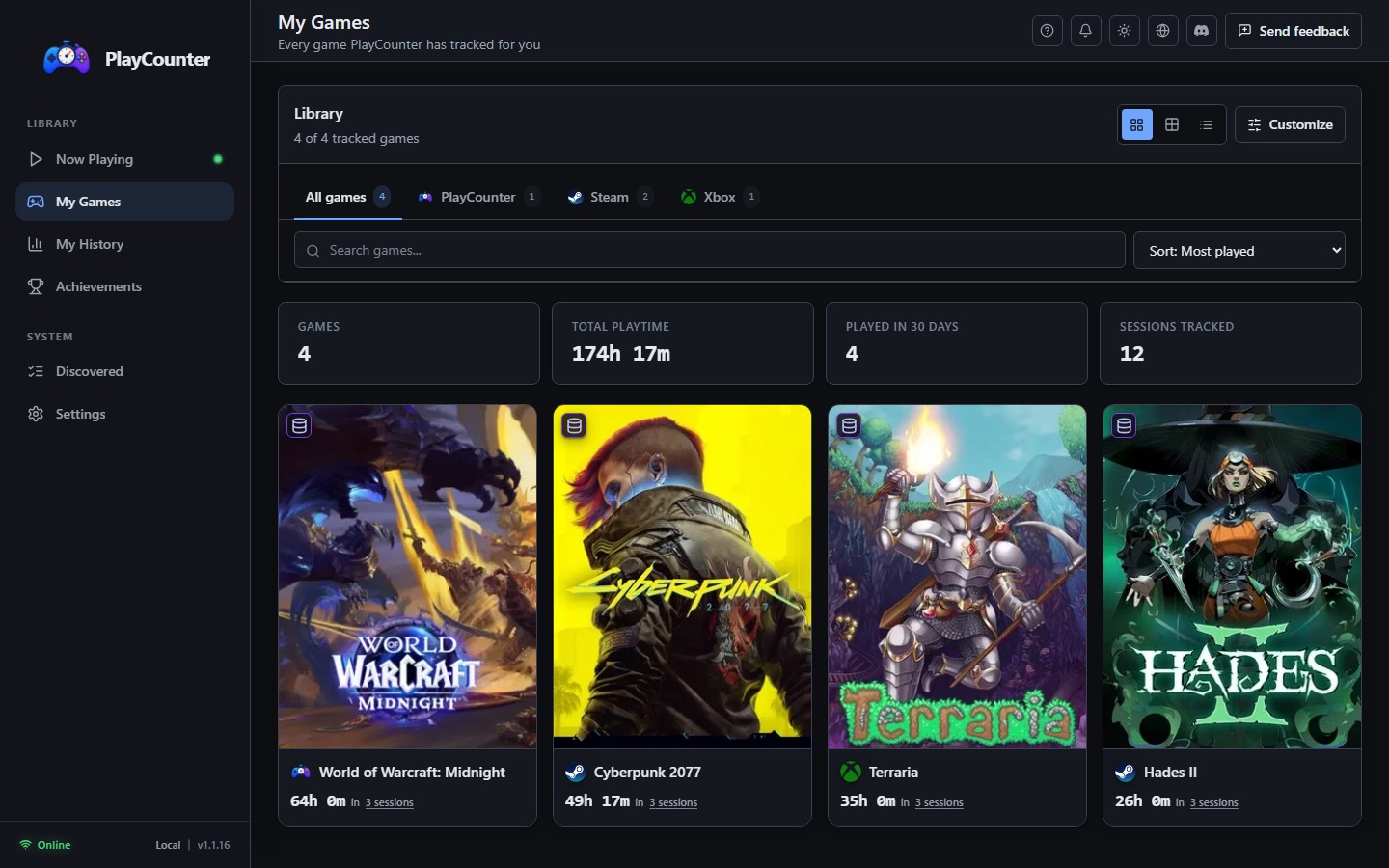
- Open My Games to see recognized games with their covers and recorded hours.
- Use the Steam and Xbox tabs to import the games and previous playtime you want to include.
- Review uncertain matches before importing. The All games tab brings the results together.
Bring in earlier hours
Steam import reads the available library and playtime from a Steam account on this PC. Xbox import uses a Microsoft sign-in and the playtime that individual games report to Xbox. These are optional imports; automatic PC tracking does not depend on them.
PlayCounter does not currently import historical hours from Epic, GOG, EA, Ubisoft, Battle.net or other launchers. Their recognized PC games can still be tracked as you play. An imported total is a starting reference, not a reconstruction of past sessions.
How playtime totals work
For a matched game, PlayCounter shows the higher of your local total (including any manual adjustment) and the largest imported provider total. It does not add overlapping launcher totals together.
For example, a game with 100 hours reported by Steam, 70 by Xbox and 20 recorded locally shows 100 hours, not 190. New local sessions still appear in history, but the displayed total stays at 100 until the local total or an updated import exceeds it.
Run an import again to refresh the available provider totals. Games matched to the same game identity share a total; review unmatched or ambiguous entries so the correct titles are linked.
Browse your sessions and statistics
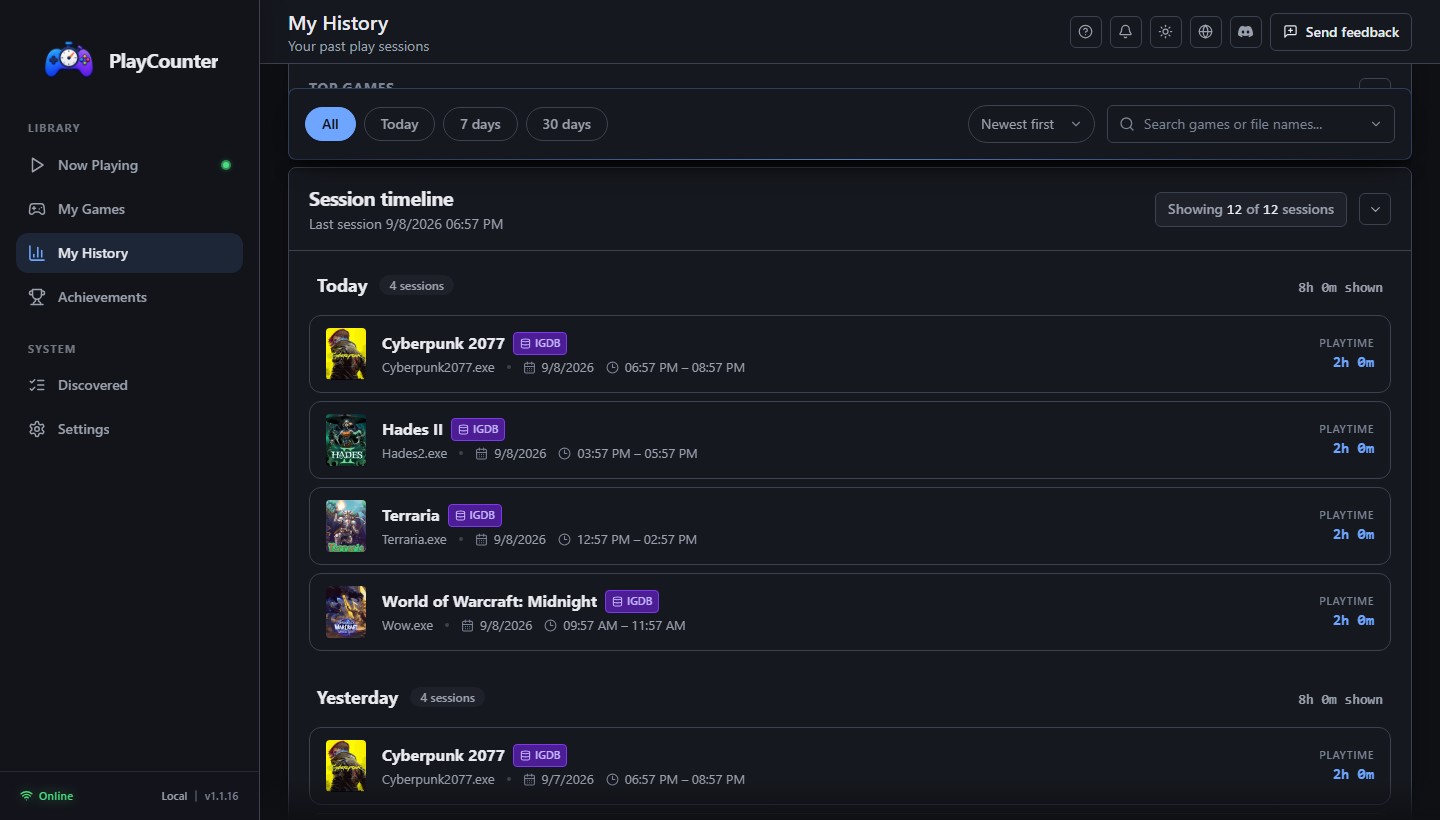
My Games offers search, sorting, provider tabs and different library layouts. My History shows the sessions PlayCounter recorded, with playtime statistics. Imported historical hours belong in game totals; they are not invented session entries.
You can add a session or adjust a game total manually when you have earlier time to include. Export a backup in Settings before moving to another PC.